Your shopping cart is currently empty. Please choose from one of the categories at the left to see our products.
Lavender Essential Oil: What It Is, How It's Made, and How to Use It
Lavender essential oil is a staple in perfumery and fragrance blending, and its chemistry is more varied than its reputation suggests. The genus Lavandula alone contains dozens of species, each with a distinct constituent profile, before accounting for cultivation method, harvest timing, and extraction technique. Two bottles labeled lavender can smell nothing alike, which makes knowing what you are buying worth the time.
What Is Lavender Essential Oil?
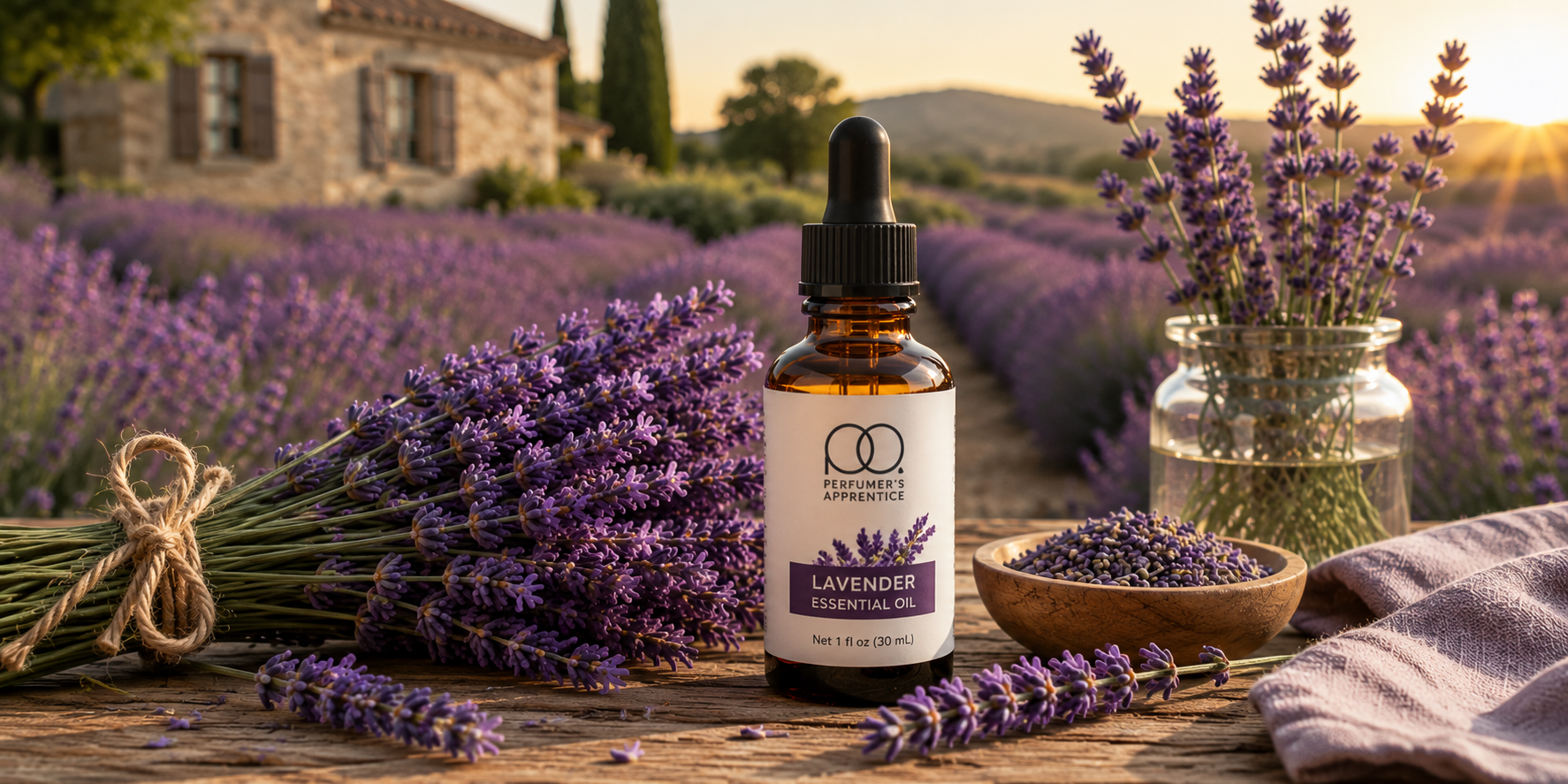
Lavender essential oils are a steam-distilled extract taken from the flowering tops of plants in the Lavandula genus, primarily Lavandula angustifolia. The oil is composed largely of linalool (CAS# 78-70-6) and linalyl acetate (CAS# 115-95-7), two aromatic compounds that give lavender its characteristic floral, slightly herbaceous character. Linalool brings a soft, woody-floral quality, while linalyl acetate contributes a fruity, almost pear-like nuance. Minor constituents, including camphor, 1,8-cineole, beta-ocimene, and terpinen-4-ol, round out the profile and shift based on origin, variety, and growing conditions.
Limonene terpene brings citrus brightness to a fougere, preventing lavender from going flat in the top note.
Lavender Varieties Carried for Fragrance Work
Lavender oil is not a single material, and variety, format, and extraction method all produce oils with their own scent profiles, diffusion rates, and blending characteristics. The catalog spans pure essential oils, absolutes, standardized blends, and isolated aroma chemicals:
Lavender Maillette, France (Pure and Natural)
Lavender Maillette is a fine lavender cultivar of Lavandula angustifolia, reproduced through vegetative propagation rather than seed germination. Its higher linalyl acetate content gives it a sweeter, softer scent character compared to other angustifolia varieties, with less of the sharp, camphoraceous edge present in lavandin or spike lavender. Flowering tops are conventionally harvested, and the oil has CAS# 8000-28-0. Intended uses include perfumery, aromatherapy, and cosmetic applications.
Lavender Absolute (Robertet)
Lavender Absolute from Robertet is produced through solvent extraction, a process that captures heavier molecular compounds that steam distillation cannot volatilize. The result is an aromatic, floral, green, and fresh scent profile with more body than a distilled oil. It is IFRA compliant and carries CAS# 8000-28-0. This material works well in fine fragrance construction where a fuller, more naturalistic lavender character is needed.
A small percentage of patchouli oil in the base is often what separates a lavender blend that lingers from one that disappears on skin.
Lavender Fleurs, France (Robertet)
Lavender Fleurs is an extraction of just the flowers of the lavender plant, without the stems. The result is a material that captures the soothing, pure character of the lavender flower without the green, vegetal quality that stems contribute to many lavender products. For anyone who has found standard lavender materials too green or sharp, this is a noticeably different experience.
Lavender 40/42 Oil Blend
Lavender 40/42 is a standardized blend of lavandin and lavender oils, adjusted so that linalool and linalyl acetate consistently fall within the 40 to 42 percent range. This eliminates year-to-year crop variation and delivers a crisp, fresh floral profile with a slightly woody finish. The blend contains natural ingredients, but the standardization process means it is not classified as a natural product.
Lavender Fragrance Oil (Premium)
Lavender Fragrance Oil Premium is a pre-blended fragrance oil, not a pure essential oil or extract, with a refined and consistent lavender scent profile. It comes in sizes from 15ml up to 1kg, so there is an option whether you are testing a formula or filling production orders.
Lavender Aldehyde FCC (Bedoukian)
Lavender Aldehyde (CAS# 35158-25-9, FEMA# 3406) is an isolated aroma chemical, not a whole oil or extract. The odor is powerful and diffusive, with herbaceous character alongside cocoa, blueberry, bergamot, and clary sage facets. It performs well in fougere constructions and blends with bergamot, clary sage, and citrus materials, with a recommended fragrance use level of 1 to 5 percent. In flavor applications, it contributes dry cocoa powder notes to chocolate, blueberry, and cranberry profiles at a recommended use level of 1 to 5 PPM.
Where Lavender Oil Goes in a Fragrance
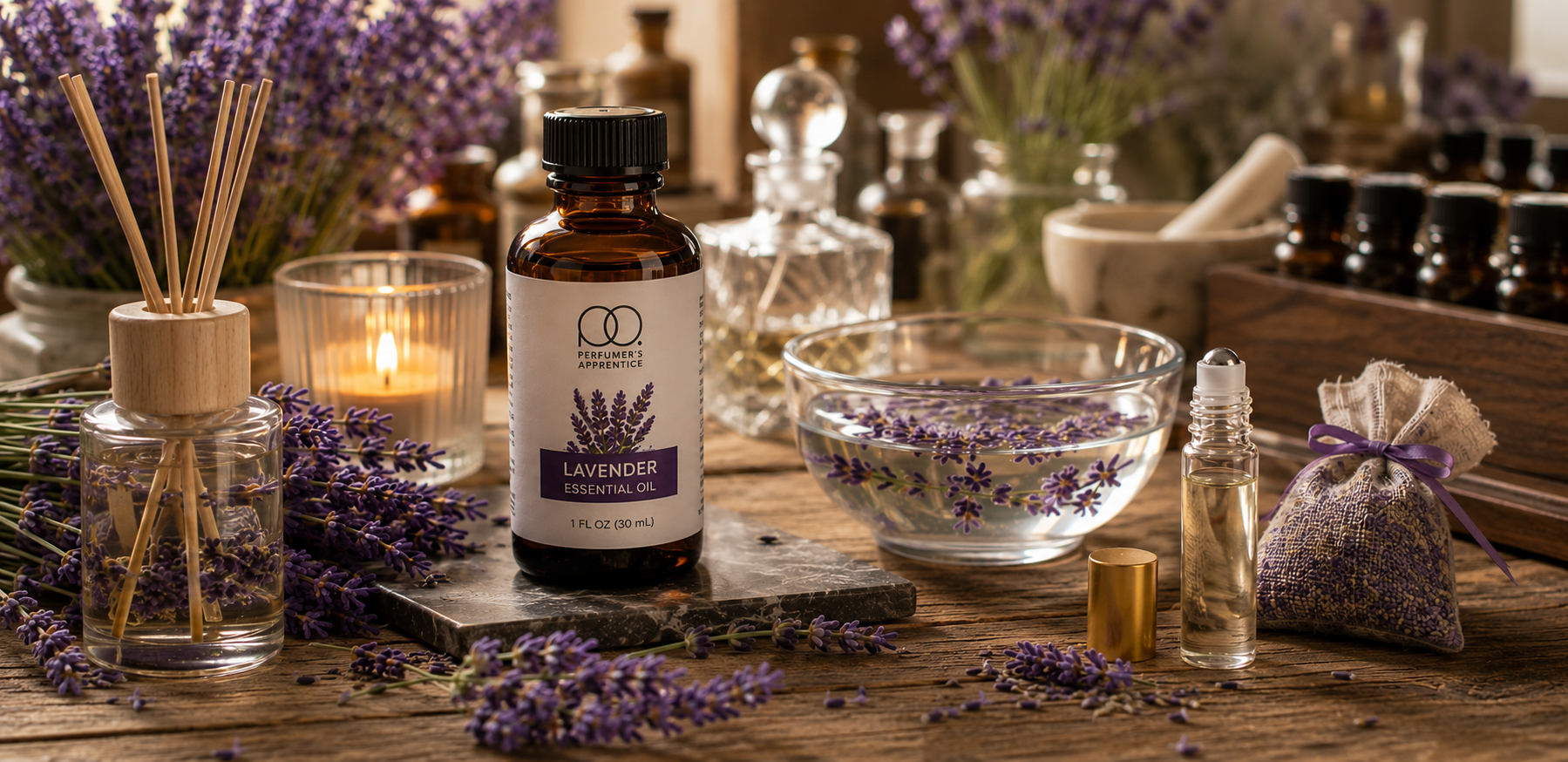
Lavender is a heart note material with reasonable tenacity, though it lacks the weight to anchor a base. Typical usage rates fall in the 1 to 35 percent range, though most applications land between 5 and 15 percent, and at very high concentrations, camphoraceous facets tend to come forward. The material shows up in:
- Fougere: Sits at the center of the accord, balanced against oakmoss or modern oakmoss replacements, coumarin, and bergamot, a structure that shaped a large category of men's fragrance.
- Aromatic Florals and Chypres: Comes across as fresh and bright, adding lift to the heart without competing with surrounding materials.
- Gourmands and Musky Florals: Reads powdery and soft, settling into the warmer, heavier base.
Pairing Lavender With Other Aromatic Materials
Lavender softens sharp musks, adds lift to heavy wood bases, and rounds out citrus top notes that would otherwise sit separately. It is one of the more cooperative materials to blend with:
- Bergamot: Produces the classic aromatic opening found in many eau de colognes, bright and slightly sweet with good early projection.
- Cedarwood: Forms the structural base of many fougere accords.
- Vetiver: Sits earthy and herbal together, with vetiver grounding the lighter floral notes.
- Coumarin or Tonka Bean Absolute: Produces the warm, powdery character associated with barbershop accords.
- Lavender Aldehyde: Blends with bergamot, clary sage, and citrus materials and is a strong fit for fougere constructions.
- Lavender Absolute from Robertet: Suits compositions calling for a deeper floral core alongside high tenacity base materials like labdanum or benzyl benzoate.
Source Your Lavender at Perfumer's Apprentice
Perfumer's Apprentice has supplied aromatic materials to perfumers and fragrance hobbyists since 2004, with no minimum orders and sizes ranging from small trial quantities to 500g, depending on the material. The lavender catalog includes Lavender Maillette France, Lavender Absolute from Robertet, Lavender Fleurs France from Robertet, Lavender 40/42, Lavender Aldehyde FCC from Bedoukian, and Lavender Fragrance Oil Premium. Each product page includes CAS numbers, intended use classifications, and odor descriptions. Shop our full fragrance catalog to find the best material for your blend.
Frequently Asked Questions
What is lavender essential oil used for in perfumery?
Lavender essential oil is a heart note used most often in fougere constructions, balanced against coumarin, bergamot, and oakmoss replacements. It also appears in aromatic florals, chypres, and gourmands, reading fresh and bright or powdery and soft depending on surrounding materials.
How do different types of lavender essential oil compare in scent?
Lavender essential oil scent profiles vary by species, extraction method, and constituent percentages. Maillette skews sweeter due to higher levels of linalyl acetate, while a lavender absolute carries more body and depth because solvent extraction captures compounds that steam distillation cannot volatilize.
Can lavender essential oil be blended with other fragrance materials?
Lavender essential oil blends with bergamot, cedarwood, vetiver, coumarin, and tonka bean absolute, each combination producing a distinct accord. Lavender aldehyde is another blending option, bringing diffusive herbaceous character and lift to fougere constructions.