Your shopping cart is currently empty. Please choose from one of the categories at the left to see our products.
Strawberry Flavoring: Types, Uses, and How It Works
Strawberry is one of those flavors everyone seems to love. Sweet, juicy, and refreshing — it's summer in a bottle. Strawberry flavoring gives you that taste year-round without worrying about whether your berries are ripe enough or in season. Just a few drops can transform drinks, desserts, or candies with consistent results every time.
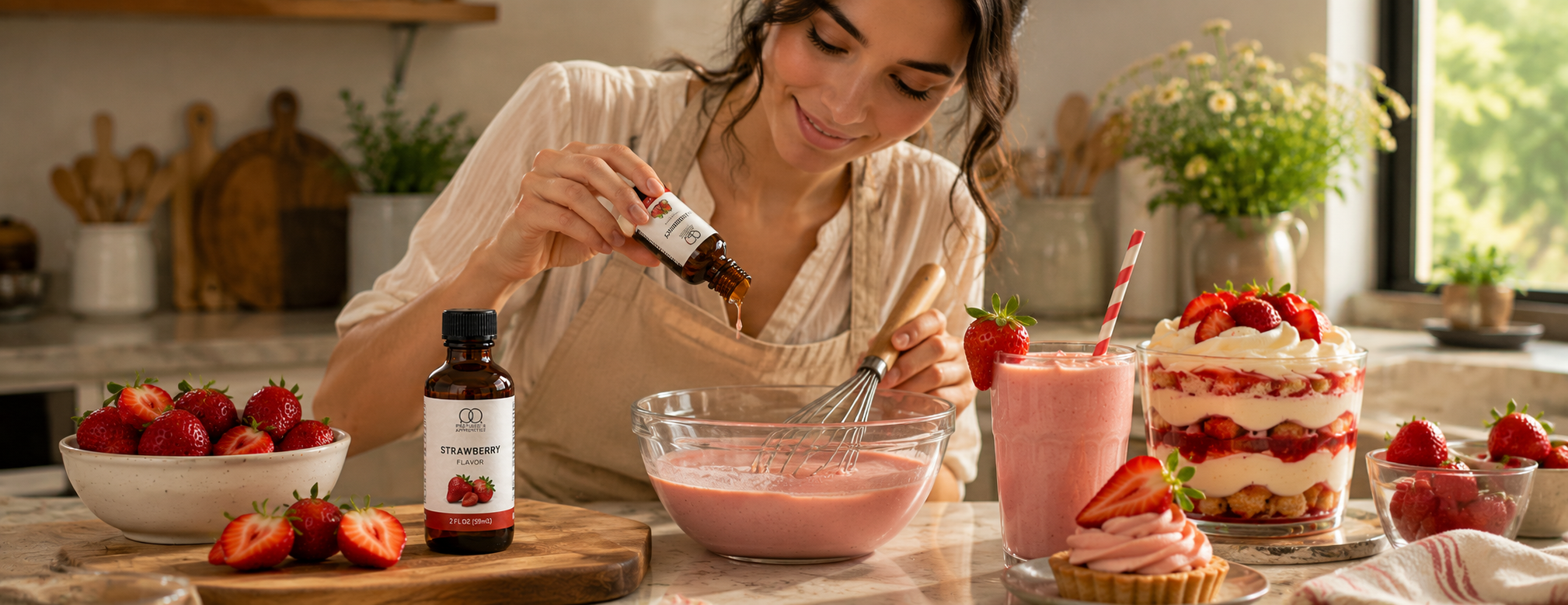
How Strawberry Flavoring Works
Strawberry flavoring is a concentrated liquid made from flavor molecules that replicate the taste of strawberries. Some versions use natural compounds extracted from real strawberries or other plants. Others use artificial molecules created in a lab that are chemically identical to what's in the fruit.
Many blends use both to balance intensity and cost. These concentrates dissolve in carriers like propylene glycol or ethyl alcohol, making them water-soluble and easy to work with in most recipes. Strawberry flavoring uses aroma chemicals like ethyl butyrate and furaneol, which interact with your taste buds, whereas fragrance ingredients like ambroxan scent target your sense of smell.
Types of Strawberry Flavor Profiles
Not all strawberry flavoring tastes the same, and that's a good thing. The small sizes allow you to test which profile works best for your recipes before committing to a bulk purchase. Each profile has its own personality — some stay close to fresh fruit, others lean into jam or cream:
- Strawberry: A fresh, natural strawberry flavor that's versatile and balanced for general all-purpose use.
- Fresh Strawberry: Captures that just-picked brightness — light and crisp like biting into a berry on a sunny day.
- Ripe Strawberry: An extra-ripe, jam-like strawberry with rich flavor similar to what you'd find in preserves.
- Splash Strawberry: Juicy and vibrant with sweet strawberry notes and the refreshing character of a summertime drink.
- Strawberries and Cream Flavor: A creamy strawberry with dairy notes, developed by popular request.
- Strawberry Lemonade: A fresh summer drink blend with ripe strawberries and zesty tart lemon.
- Sweet Strawberry: A dessert-like strawberry that's sweeter and more candy-forward.
- Strawberry Yogurt: Creamy, fresh strawberry with tangy yogurt notes.
Peach flavoring pairs beautifully with strawberry in smoothies and baked goods, adding a depth of stone fruit that complements the berry's brightness.
Using Strawberry Flavor in Recipes
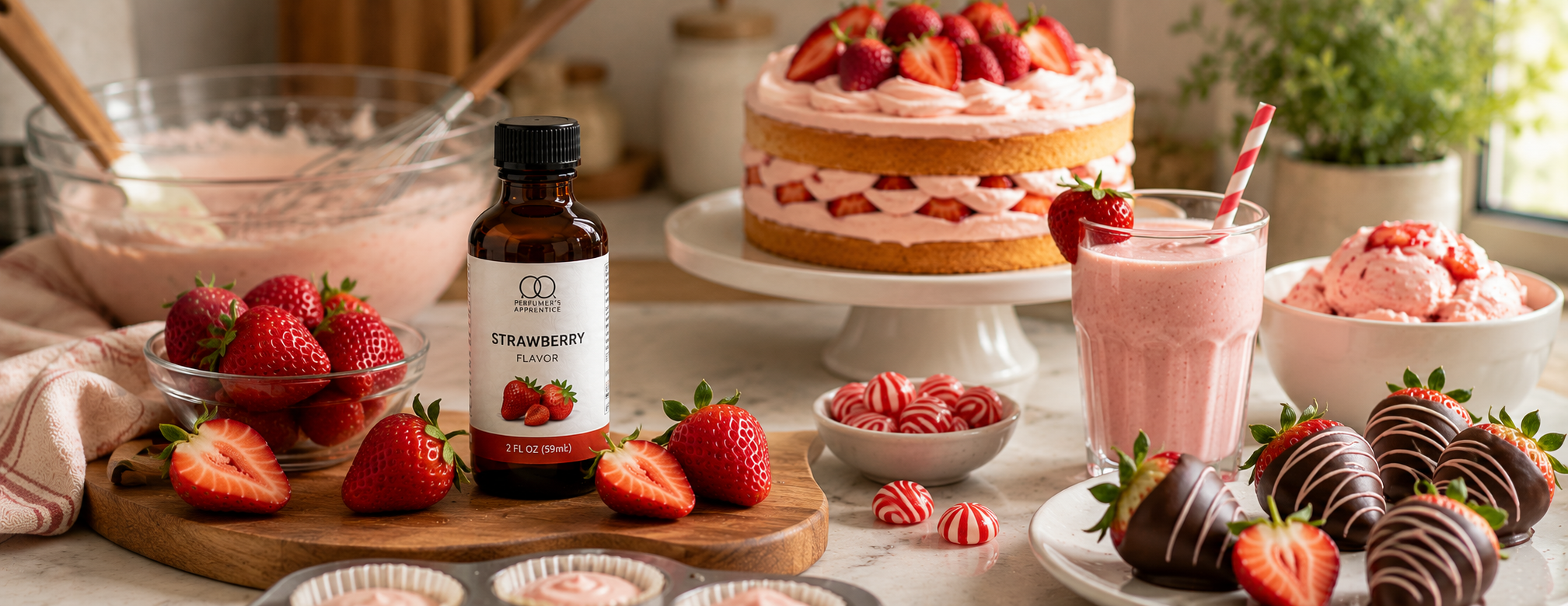
These concentrates are strong, so start with 5-10% of your total recipe. You can always add more if you want a bolder flavor. Strawberry pairs well with vanilla, cream, chocolate, lemon, and other berries — think strawberry cake, strawberry lemonade, or chocolate-covered strawberries.
Mix it into beverages like smoothies or iced tea, fold it into batters and frostings, or use it for candy-making. Drinks and frozen desserts let the strawberry flavor shine through clearly. Baking might require slightly more since heat mellows the intensity during cooking.
Find Your Strawberry Flavor at The Flavor Apprentice
The Flavor Apprentice supplies professional flavor concentrates for culinary enthusiasts and professionals alike. We offer a variety of strawberry flavor profiles, allowing you to find the one that works best for your recipe, from the fresh fruit brightness in beverages to the jam-like richness in desserts. Explore our selection of strawberry flavoring options at PerfumersApprentice.com.
Frequently Asked Questions
What is strawberry flavoring made from?
Strawberry flavoring is made from flavor molecules dissolved in carriers like propylene glycol or ethyl alcohol. These molecules can come from natural sources like real strawberries or be artificially created compounds that are chemically identical to what's in the fruit.
How much strawberry flavor should I use in recipes?
Start with 5-10% of your total recipe since these concentrates are strong. You can always add more to reach the intensity you want, but it's easier to add than to fix an overpowered flavor.
Can strawberry flavoring be used in baking?
Yes, strawberry flavoring works in baked goods like cakes, muffins, and frostings. You might need slightly more than in cold applications since heat can mellow the flavor during cooking.